
You’re looking at an Auckland event that rewards clean first strikes, quick recovery steps, and smart point-shortening on a lively hard court. Monfils’ game can still fit that template, but the margin’s thinner with a younger, deeper field and a schedule that can drain his legs fast. If he keeps his court position tight, serves wide to backhands, and turns blocked returns into early aggression, the defense is there—until the first long week tests him.
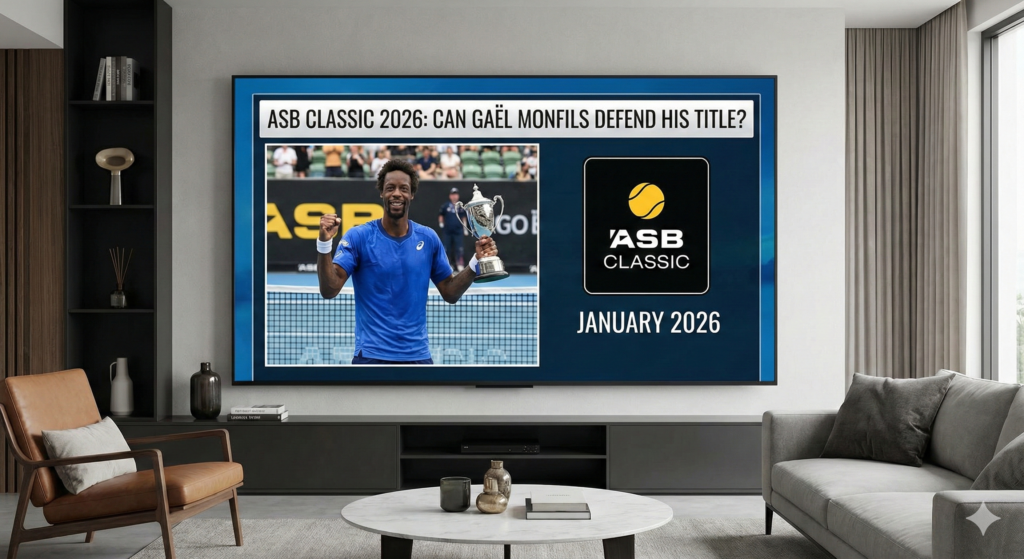
ASB Classic 2026: What Auckland Rewards
In Auckland, the ASB Classic doesn’t just crown a winner—it rewards the player who can translate quick reads into quick strikes. You’re judged on how fast you solve patterns: early ball recognition, compact swings, and decisive positioning that turns neutral rallies into first-strike tennis. You can’t drift; you’ve got to take the middle of the court and keep return games on a short leash.
The Auckland incentives go beyond prestige. With ranking points front-loaded, each round you clear can meaningfully shape your Australian Open seeding and scheduling freedom. The Prize structure does the same financially: incremental paydays reward consistency, while the champion’s check justifies risk-taking when sets get tight. In this environment, you’re paid for commitment, not caution, under pressure.
Does Monfils’ Game Still Fit These Courts?
On Auckland’s hard courts, you’re watching whether Monfils can still trigger that first-step explosiveness to take time away and finish points before rallies settle.
The question is how his rally tolerance holds up when opponents flatten the ball and raise the baseline pace. If he’s consistently the one absorbing speed rather than redirecting it, these courts start to look less like a fit and more like a test.
Explosiveness On Hard Courts
Explode might be the verb that best frames Monfils on hard courts, because the ASB Classic’s quicker Auckland surface has always rewarded his first-step burst, elastic defense-to-offense shifts, and ability to turn a neutral rally into a sudden sprint-and-strike pattern.
In 2026, you’re watching whether that ignition still wins points on contact. When his feet find reliable court grip, he can slide just enough to load, then spring into forehand acceleration without losing balance. The key is how often he turns wide serves into immediate pressure: one explosive split-step, a stretched block, then clean sprint recovery to reset the center. If his legs hold through back-to-back shifts, you’ll see opponents rushed into low-percentage passes. If not, the court flips from playground to trap fast.
Rally Tolerance Versus Pace
Even if the Auckland hard court still rewards first-strike tennis, Monfils’ 2026 test is whether he can absorb pace often enough to earn the right to counter. You’ll watch his rally tolerance in the first two shots after serve: if he floats short, hitters take your freedom away. If he holds depth with spin control, he can reset points and choose when to sprint.
- Take court positioning earlier on neutral balls, not five feet back.
- Use higher, heavier forehands to bend pace and buy time.
- Block returns deep crosscourt, then change direction first.
- Protect the backhand corner with length, not miracle slides.
Against clean ball-strikers in Auckland, you’re betting he can extend rallies just long enough to flip momentum.
How Monfils Won Auckland in 2025
Although the ASB Classic often rewards early-season rhythm more than raw brilliance, Monfils won Auckland in 2025 by marrying his trademark defense and flair with unusually clean, percentage-first patterns that held up under pressure.
You saw him simplify: first-serve placement to the backhand, then heavy crosscourt to buy time and reset baseline positioning. When rallies spiked, he didn’t chase winners; he stretched points until errors arrived, then used crowd momentum to lean into bolder changeups.
His comeback tactics were built on patience—saving break points with high-margin targets and disciplined depth, not hero shots. Once opponents camped deep, you watched him puncture them with timely net approaches, finishing with short volleys after disguised drop shots and sharp angles. That mix kept chaos on his terms all week.
ASB Classic 2026 Contenders Who Can Stop Him
Circle the names that can take time away from Monfils before his defense and crowd-fed momentum settle in. You’re hunting opponents who can shorten points, redirect pace, and make him hit first volleys on demand. In Auckland’s low-bounce rhythm, the threat isn’t just power; it’s tactical variety and fearless shot selection from young challengers.
- A flat first-strike baseliner who attacks his second serve, then pins him backhand-to-backhand
- A lefty server with wide-slice patterns that opens the court and drags him off balance
- A counterpuncher who absorbs the showmanship, resets rallies, and steals net clearance
- A disciplined net-rusher who serves-plus-ones, takes time, and forces passing-shot precision
If those profiles land in his section, you’ll see real pressure before the final.
Three Risks That Could Derail Monfils
You can’t handicap Monfils at the ASB Classic without pricing in the injury and recovery burden that can blunt his first-step explosiveness over back-to-back matches.
You’ve also got to weigh fatigue from the tour schedule, because even a small drop in legs turns long rallies and tight service games into late-set liabilities.
And if the rising challenger field arrives match-tough and fearless, you’re looking at early-round opponents who’ll test his timing and make every hold feel earned.
Injury And Recovery Burden
With Auckland’s quick turnaround from the offseason into best-of-three grind, Monfils’ biggest variable isn’t shotmaking—it’s whether his body can absorb the load without stealing his legs between rounds. You can’t play free if you’re protecting a hamstring on every wide forehand. In tight sets, the first dip in explosiveness turns defense into bailouts, and opponents sense it.
- injury management that prioritizes flare-ups over bravado
- recovery protocols that actually restore, not just numb
- muscle strengthening to keep ankles, knees, and back stable on hard courts
- load monitoring so practice intensity doesn’t spike before match day
If any link breaks, your patterns shorten: fewer slides, safer serves, and rallies you can’t finish at net.
Fatigue From Tour Schedule
Fatigue is the quiet tax that can turn Monfils’ Auckland upside into a week-long negotiation with his legs. You can’t defend a title if you’re arriving with tour fatigue baked in, and schedule congestion punishes his high-wire style: extra lunges, extra decels, extra recovery time. In Auckland’s quick points, a half-step late flips rallies into scrambles and asks for low-percentage defense.
| Stressor | Match consequence |
|---|---|
| Back-to-back travel | Slower first-serve timing |
| Short turnaround | Heavier legs in third sets |
When the week tightens, you’ll see it in return position: he’ll stand deeper, then chase more. The freedom you want—choosing when to attack—shrinks, because you’re managing energy instead of dictating patterns. The margin disappears under pressure.
Rising Challenger Field
Expect the draw to bite harder in 2026, because the “challenger-to-tour” pipeline is feeding Auckland with younger, match-hardened hitters who treat quick courts like a finishing school. You won’t just be defending a trophy; you’re steering youthful breakouts who swing freely, take returns early, and aren’t burdened by reputation. That shifts margins: shorter points, fewer neutral rallies, more first-strike tennis.
- They serve big, then hunt your second ball
- They redirect pace, forcing you to defend immediately
- They play loose under lights, so momentum flips fast
- Qualifying darkhorses arrive already dialed in
If you get a slow start, they’ll seize autonomy and run with it. Your variety still matters, but you’ll need ruthless holds and clean early-round focus to avoid an upset.
How Monfils Can Defend His ASB Classic 2026 Title
Although the Auckland field will be deeper and Monfils won’t sneak up on anyone as the defending champion, his path to holding the ASB Classic title still starts with controlling the match tempo: serve-plus-one discipline to keep points on his terms, aggressive court positioning to prevent opponents from camping on his backhand, and selective use of his defense to turn rallies into counterpunching chances rather than extended neutral exchanges.
From there, you’ll want serve variety—slice wide on the deuce side, body serves to jam returners, and occasional kick to the ad court—to protect second-serve points. On return, you can buy freedom by blocking deep and immediately taking the middle, forcing first-strike errors. Manage your legs with short bursts, then pounce when opponents hesitate, especially in tight tiebreak patterns.
Frequently Asked Questions
What Are the ASB Classic 2026 Dates and Daily Match Start Times?
You can’t lock in ASB Classic 2026 dates or daily start times yet; Tournament schedule and Match timings aren’t officially published. You’re free to plan loosely: expect early-week noon/afternoon sessions, later rounds evening.
Where Can Fans Watch ASB Classic 2026 Live on TV or Streaming?
You’ll watch live via your local broadcaster holding broadcast rights, or on official streaming platforms tied to the ATP/WTA feed. For example, in Australia you’d use beIN Sports, then stream matches on beIN CONNECT.
How Do I Buy Tickets, and Are There Session Passes Available?
Buy tickets through the tournament’s official site or authorized sellers; you’ll typically find session passes plus ticket bundles. For extra autonomy and match-day flexibility, compare hospitality packages and multi-session deals to target desired courts.
What Is the Tournament’s Entry List and When Is the Draw Released?
You’ll get the entry list once ATP posts it online; the draw’s usually released 1–2 days pre‑main draw. Theory: it’s “fixed”—but player withdrawals and wildcard announcements constantly reshape matchups, keeping you free to speculate.
Are There Autograph Sessions or Fan Events Scheduled During the Tournament?
You’ll usually find autograph sessions, player meetups, and occasional charity exhibitions, but schedules aren’t always locked early. Check daily order-of-play notes and tournament social feeds, so you can pick match windows and roam freely.