
You’re watching comfort and luxury converge in your feed: smashed potatoes, engineered for maximum crispy surface area, and Japanese strawberries, optimized through breeding, greenhouse control, and strict grading until they’re gift-worthy. One trend turns “imperfect” into photogenic crunch; the other turns fruit into a status symbol with a price tag to match. The real story is why these two formats—rough and refined—hit the same cultural nerve, and what that means for how you cook and buy next…
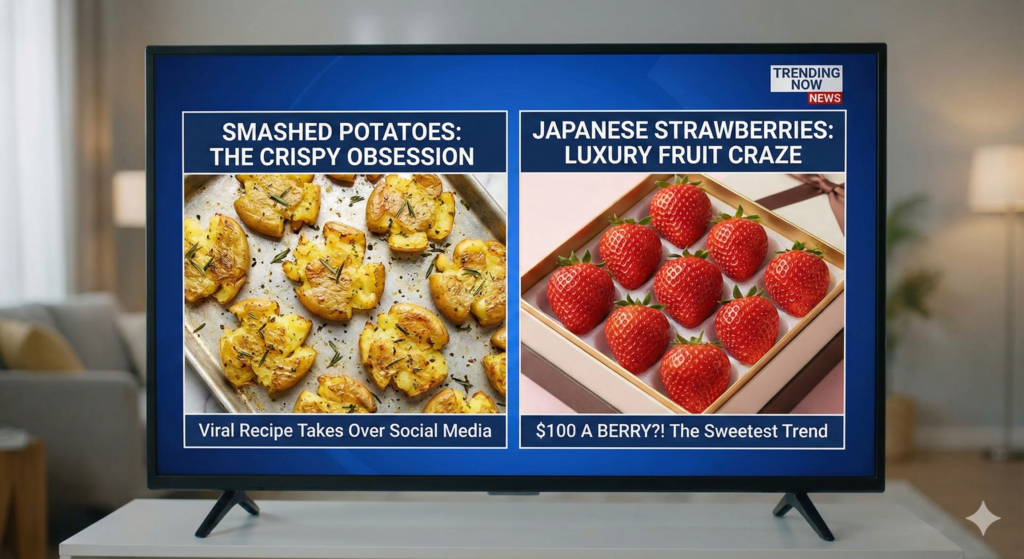
Viral Trend #1: Why Smashed Potatoes Blew Up
Culturally, they’re anti-gatekeeping comfort food: cheap, flexible, and ready for your rules—garlic, chili crisp, vegan butter, whatever. Celebrity endorsements amplify the signal, turning a humble side into a status snack without making it fussy.
Then recipe challenges do the rest: creators compete on smash patterns, seasoning stacks, and “best dip” brackets, pushing constant remixes. You get maximum autonomy, maximum payoff, and instant shareability.
Make Crispy Smashed Potatoes (Step-by-Step)
To nail the viral smashed-potato crunch, you’ll boil baby potatoes until just tender, then steam-dry them so surface moisture doesn’t sabotage crisping.
Next, you’ll smash them flat for more jagged edges—aka more browning real estate that’s made this technique a feed favorite.
Finish by seasoning aggressively and roasting hot, because high heat plus oil is the algorithm behind that shatter-crisp texture.
Boil And Steam Dry
Before you even think about smashing, boiling baby potatoes in heavily salted water and then letting them steam-dry is the step that separates soggy from shatter-crisp.
You’re engineering texture: salt in the water seasons past the skin, and a steady simmer keeps starches from exploding.
Aim for fork-tender, about 12–15 minutes depending on size, then drain fast.
Now commit to the steam method.
Return potatoes to the hot pot, lid off, and shake over low heat 60–90 seconds.
That evaporates surface moisture so oil later bonds, not beads.
This dry finish is the quiet trick behind the TikTok crunch clips—less water equals more browning, faster.
You’re not following rules; you’re taking control of the outcome.
Smash For Maximum Crisp
Smash each steam-dried potato hard enough to split the skin and expose a wide, craggy surface—because surface area is the math behind that viral crunch. Use a flat-bottom cup or spatula; aim for 1/2-inch thickness so you get maximum edge-to-center ratio. You’re hacking crispiness without gatekeepers: more ridges mean more future bite.
| Move | Target metric | Why it pops |
|---|---|---|
| Press | 12–15 lb force | Deep cracks form |
| Rotate | 90° mid-press | Even spread |
| Stop | 1/2 in thick | Avoid mush |
| Space | 1 in apart | Steam escapes |
For culture cred, keep shapes imperfect—TikTok loves “rustic chaos.” You’ll nail texture contrast, and your serving presentation reads bold, unbothered, and totally yours.
Season And Roast Hot
Now that you’ve built those craggy edges, it’s time to lock in flavor and turn that surface area into audible crunch by seasoning fast and roasting hot. Heat’s your leverage: at 450°F, moisture flashes off, starches set, and you get that viral snap in under 20 minutes. Toss with oil, salt, and an acid-friendly spice—think shichimi or smoked paprika—so every ridge tastes intentional, not bland.
- Season smart: salt first, then fat, then aromatics; finish with lemon zest or vinegar powder for lift.
- Choose roast methods: preheated sheet pan or cast iron; both boost contact browning.
- Target seasonal pairings: miso butter + scallions in winter, herb chimichurri in summer, chili crisp year-round.
Flip once; don’t babysit. You’re free to chase crunch, not rules.
Smashed Potato Fixes: No Crunch, Sticking, Soggy
Although smashed potatoes look foolproof on TikTok, most “fails” trace back to three repeatable issues: no crunch (too much surface moisture and not enough high-heat fat contact), sticking (weakly oiled pans or starchy residue welding to the tray), and sogginess (steam trapped under overcrowding or under-baked centers). You don’t need gatekeepers—just controlled variables: dry, hot, spaced.
| Symptom | Fix |
|---|---|
| No crunch | Pat dry to beat moisture buildup; use high-smoke oil; roast at 450°F on preheated metal. |
| Sticking | Scrub starch off, oil tray generously, or use parchment; flip once for even contact. |
| Soggy | Avoid overcrowded baking; parboil until edges crack; smash evenly to prevent uneven potatoes; thin skins crisp fastest. |
Track outcomes like a creator: time, temp, spacing.
Viral Trend #2: What Makes Japanese Strawberries Special?
Because Japan treats strawberries like luxury fruit—not a cheap spring staple—the difference is measurable: growers optimize for sugar, aroma, and appearance through variety breeding (think Tochiotome, Amaou), greenhouse control, and strict grading that rewards uniform size, glossy skin, and near-perfect shape.
You’re not just buying fruit; you’re opting out of mediocre produce culture.
- Flavor engineering: precise breeding targets high Brix and layered fragrance, while tiny seeds sit cleanly on tender flesh.
- Timing discipline: a pre-dawn morning harvest limits heat stress, locking in volatile aromatics and snap.
- Ritual presentation: artisanal packaging protects bloom, prevents bruising, and signals respect—like a gift you choose for yourself.
That’s why the bite goes viral: it tastes curated, not commoditized, and you feel the difference immediately.
Why Japanese Strawberries Are So Expensive
That curated, gift-grade bite comes with a price tag that’s built into the system: Japanese strawberries are expensive because growers run high-touch, low-yield operations designed for perfection, not volume.
You’re paying for controlled greenhouses, hand pollination, and strict culling—often only the top-grade berries ship. With tight harvest windows and meticulous packing, limited supply is a feature, not a flaw.
Culture does the rest: fruit gifting is serious, and high end branding turns a berry into status you can taste. Regional cultivars, trademark standards, and auction-style distribution push prices upward.
Add higher land and labor costs, and you get premium units sold like luxury goods. You’re not buying “more”; you’re buying certainty—sweetness, symmetry, and a story you chose.
Buy and Serve Japanese Strawberries (Smart Swaps)
Sticker shock aside, you can still get the Japanese-strawberry experience if you buy with intent and serve like a gift shop curator. Track seasonal availability first: top lots peak winter to early spring, and import windows move fast.
Then hack the vibe with smart swaps that keep the luxury narrative while you stay in control of your spend and your table.
- Buy: Choose 6–8 large berries over a cheap clamshell; bigger fruit signals omiyage culture and photographs better.
- Swap: Use premium local berries plus a spoon of yuzu, condensed milk, or mascarpone to mimic flagship flavor profiles.
- Serve: Chill plates, wipe each berry, and box them with parchment; add a tasting card like a micro flight.
Frequently Asked Questions
Are Smashed Potatoes Gluten-Free and Suitable for Celiac Diets?
Yes—you can make smashed potatoes gluten free? and celiac safe? if you use plain potatoes, avoid cross-contact, and choose certified ingredients. Most cultures’ staple spuds work; watch seasonings, fryers, and shared prep surfaces.
Can I Air-Fry Smashed Potatoes Instead of Using an Oven?
Yes—you can air-fry smashed potatoes; the oven’s not your only overlord. Use an air fryer technique: 200°C/400°F, 10–15 minutes, flip. Texture comparison: crispier edges, slightly drier centers. Your crunchy freedom wins.
Do Japanese Strawberries Freeze Well for Smoothies or Desserts?
Yes—you can freeze Japanese strawberries for smoothies; they’re less ideal for pristine desserts. Follow best practices: hull, flash-freeze, then seal airtight. Expect texture changes from high water content, while flavor stays luxe, buzzworthy.
Are Japanese Strawberry Varieties Available to Grow Outside Japan?
Yes—you can grow some Japanese strawberry varieties outside Japan, but availability’s limited by licensing and nurseries. You’ll win with container gardening, local quarantine compliance, and choosing cold hardy cultivars; your terroir, your rules, buzzworthy harvests.
How Can I Spot Counterfeit “Japanese Strawberries” in Local Markets?
Luxury in your hand, fraud on the table: you’ll spot counterfeit “Japanese strawberries” by checking appearance cues—uniform shape, glossy dye, oversized calyx—and challenging seller claims: origin paperwork, cultivar name, Brix stats, traceable labels.