
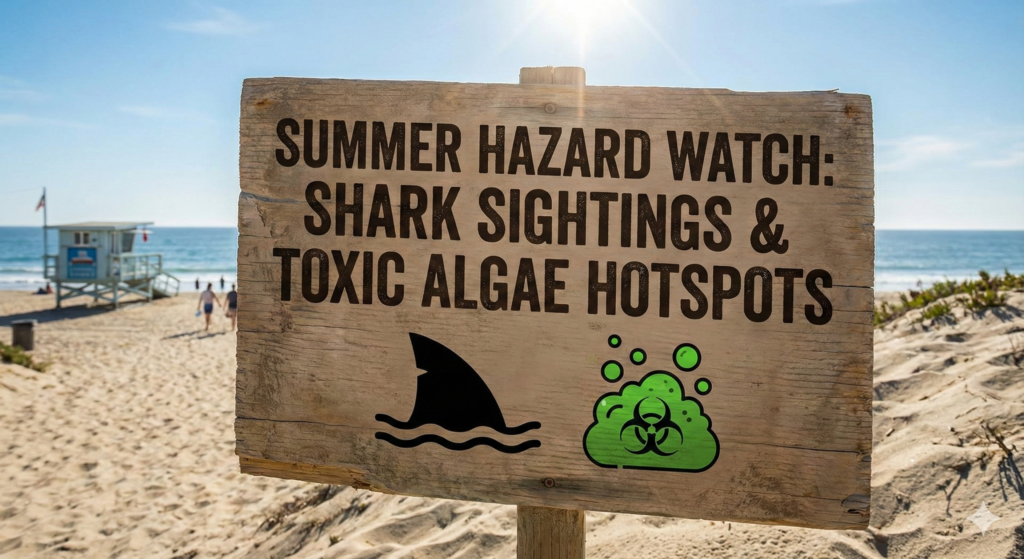
Summer Hazard Watch? You can have clear skies and still face two near‑shore summer hazards: sharks tracking baitfish and toxic algae blooms fed by warm, shallow, nutrient‑rich water. You’re most at risk around inlets, murky runoff, marinas, and foamy or discolored surf where prey and toxins concentrate. Don’t assume it’s safe if you don’t see flags—check local advisories and lifeguard postings, because the next clue you notice might be the one that matters most…
Why Sharks and Algae Spike in Summer
Although summer feels like peak beach season, it’s also when ocean conditions tilt toward higher shark activity and more frequent toxic algal blooms.
As water temperature rises, sharks’ metabolism and patrol range increase, and prey availability shifts toward shore with baitfish and juvenile fish clustering in warm, shallow zones.
That same heat can accelerate algal growth, especially when nutrients spike.
You’re not powerless, but you’re exposed: coastal runoff from storms, lawns, and streets delivers nitrogen and phosphorus, fueling blooms that can irritate lungs, sicken pets, and close shellfish beds.
Human activity adds pressure—more swimmers, surfboards, and fishing lines increase encounters, while disturbed seabeds and marinas can resuspend nutrients.
Summer ecology isn’t “bad”; it’s amplified, and your risk rises with it.
Beach Flags and Alerts: Check Conditions Fast
Summer’s amplified ecology means conditions can shift within hours, so your fastest risk check isn’t a gut feeling—it’s the beach’s flag system and real-time advisories.
Learn the local flag colorcodes: green signals low hazard, yellow means elevated surf or currents, red restricts swimming, double red closes the water, and purple can mark dangerous marine life or water quality events.
If flags aren’t posted or look outdated, treat that as uncertainty and dial back exposure.
Before you go, open alert apps from lifeguards, health departments, and coastal agencies to scan closures, algae test results, and marine warnings.
Use timestamps, not headlines: a 10 a.m. clear report can be obsolete by noon.
Your freedom stays intact when you choose informed risk.
Why Shark Sightings Happen Near Shore
When nearshore conditions line up—warm surface water, clear visibility, and a tight baitfish “bait ball” pushed in by currents—shark sightings rise because sharks are tracking food, not targeting people.
You’re often seeing a short-lived feeding window driven by prey aggregation, especially around sandbars, inlets, and drop-offs where tides concentrate scent and movement.
Seasonality matters: juvenile migration brings smaller sharks into shallow nurseries that offer warmth and cover, while larger predators patrol edges where prey exits.
After storms, runoff can shift salinity and visibility, changing where fish hold and where sharks follow.
Heat waves can also compress oxygen-rich water into narrow bands, crowding prey near shore and raising encounter probability even without more sharks overall.
Shark Safety: Swimmers and Surfers Checklist
Because most shark encounters are investigatory and statistically rare, your safety checklist should focus on cutting down the cues sharks key on—erratic splashing, low visibility, and prey-like clustering—while respecting the conditions that raise risk near shore. You’re freer when you manage odds: dawn/dusk, murky water, baitfish schools, and seal activity correlate with higher bite risk. Choose clean lines and calm movement, and keep exits in mind. If you carry shark deterrents, test deployment on land and don’t let gadgets replace judgment.
- Swim or surf with a buddy; avoid tight, prey-like bunching.
- Skip jewelry and high-contrast gear; reduce flash and silhouette.
- Hold a steady pace; don’t thrash when you fall.
- Plan emergency signalling: whistle, bright cap, and shore spotter.
What Toxic Algae Blooms Are (and Why They Spread)
Even if the water looks calm and “clean,” a toxic algae bloom (often called a harmful algal bloom, or HAB) can be a rapid spike in microscopic algae—usually phytoplankton like dinoflagellates or cyanobacteria—that produces toxins or drives oxygen so low that fish and invertebrates die off.
You’re most likely to see HABs where nutrient runoff loads water with nitrogen and phosphorus from farms, lawns, and leaking septic systems. Add warm temperatures, strong sunlight, and stagnant water, and growth can double fast—sometimes within days.
Stratified waters trap heat and limit mixing, letting surface blooms intensify while bottom zones lose oxygen. Some species release cyanobacteria toxins that persist after blooms fade, moving through food webs and stressing wildlife. As conditions shift with storms and heat waves, blooms can spread beyond the original source.
Algae Bloom Hotspots and Warning Signs
Although HABs can pop up offshore, you’re at highest risk in predictable hotspots: warm, shallow, low-flush waters near nutrient inputs like river mouths, stormwater outfalls, marinas, irrigation canals, and leaky septic/lagoon areas, especially after heavy rain followed by heat and calm seas.
Nutrient runoff fuels rapid growth, and tides or wind can stack cells into shoreline “scums” within hours. Use your independence: read the water before you enter it, and check local advisories backed by monitoring satellites and field samples. Prioritize ecosystems too—blooms can strip oxygen and hit fish nurseries.
- Water looks like pea soup, rust, or spilled paint
- Streaks/foam lines gather in coves and lee shores
- Dead fish or stressed birds cluster near the edge
- Visibility drops fast, even without big waves
Algae Exposure Symptoms and What to Do
If you’ve been near a suspected toxic algae bloom, watch for fast-onset warning signs like skin rash or burning, eye irritation, coughing or wheezing, nausea, or headache—symptoms often reported within minutes to hours of exposure.
You should rinse skin and eyes with clean water, remove contaminated clothing, move upwind from scummy or foul-smelling water, and avoid letting pets drink or lick algae mats.
If breathing problems, chest tightness, persistent vomiting, confusion, or worsening symptoms show up—especially in kids, older adults, or people with asthma—you should seek urgent medical care and report the location to local health or wildlife agencies to help limit broader ecological harm.
Common Exposure Warning Signs
When toxic algae are blooming, exposure can happen fast—through a mouthful of seawater, sea spray you breathe near the surfline, or skin contact during a swim—and symptoms often show up within minutes to a few hours.
You’ll want to spot early signals before they snowball, because blooms concentrate with wind, tides, and heat, and can stress fish, birds, and your body alike.
Watch for:
- Airway irritation: coughing, wheeze, throat burn, tight chest after beach air exposure
- GI upset: cramps, diarrhea, and *Nausea onset* after swallowing water or eating local shellfish
- Skin reactions: stinging, itchy rash, or “*Sunburn signs*” that don’t match UV exposure
- Neuro red flags: headache, dizziness, unusual fatigue, tingling, or confusion
Immediate First Aid Steps
Because algal toxins can move from mild irritation to respiratory or neurologic symptoms in under a few hours—and blooms can be denser in wind-driven foam and along the surfline—your first-aid priority is rapid de‑exposure: get out of the water, move upwind and away from breaking waves, remove wet clothing, and rinse skin and hair with clean fresh water (not seawater) to limit continued contact and aerosol inhalation; don’t rub your eyes, don’t eat local shellfish until advisories clear, and start tracking symptom timing and location so you can decide quickly whether to call poison control or seek urgent care.
For eyes/skin stinging, use clean-water flushes and cold compresses.
For cough or throat burn, prioritize airway clearance: sit upright, slow your breathing, sip water, and avoid smoke, sprays, and exertion.
Bag contaminated clothes to reduce re-exposure and protect wildlife.
When To Seek Care
Although many algae-bloom exposures resolve with decontamination and rest, you shouldn’t “wait it out” once symptoms escalate or spread beyond mild skin/eye irritation—especially after time in surfline foam or downwind of breaking waves where toxin-laden aerosols concentrate.
Seek medical evaluation if you develop persistent cough, wheeze, chest tightness, fever, vomiting, confusion, or rapidly worsening rash.
Kids, older adults, pregnant people, and anyone with asthma are higher-risk; toxins can trigger bronchospasm within hours and dehydration faster than you expect.
You’ve got the right to choose your adventure—don’t let a bloom choose your outcome.
- Symptoms last >24 hours despite rinsing and rest
- Breathing issues or blue lips, seek urgent care
- Eye pain, vision changes, or severe headache
- Arrange follow up care after any ER/clinic visit
Frequently Asked Questions
Do Shark Repellents or Deterrent Devices Actually Work for Swimmers?
They sometimes reduce risk, but you can’t count on them. Want a guarantee? Electromagnetic devices show mixed, species-specific deterrence; scent masking fabrics lack robust field data. You’re still responsible—choose informed, low-impact tools.
What Should I Do if I Hook a Shark While Fishing?
Keep your distance, stay calm, and prioritize quick release. Use circle hook, proper gear, and steady pressure to shorten fight time. Don’t gaff; cut leader close. Protect yourself, preserve sharks, fish free.
Can Toxic Algae Contaminate Seafood, and How Long Does It Last?
Yes—to picture it, imagine invisible toxins moving up the food web; you might object “cooking fixes it,” but it often doesn’t. Shellfish poisoning can occur; follow seafood recalls. Blooms last days–months; toxins linger weeks.
Are Pets at Risk From Shoreline Algae Mats, and What Precautions Help?
Yes—pets can be at risk from shoreline algae mats; toxins can cause vomiting, seizures, even death after Shoreline exposure. For Pets safety, keep them leashed, avoid mats/scum, stop drinking, rinse paws, report blooms.
How Can I Report Shark Sightings or Suspected Algae Blooms to Local Authorities?
You can report sightings by calling 911 for imminent danger, otherwise use your county lifeguard line or state wildlife hotline for coastline reporting, and health department portals for suspected blooms, requesting water sampling—like spotting smoke before flames.